
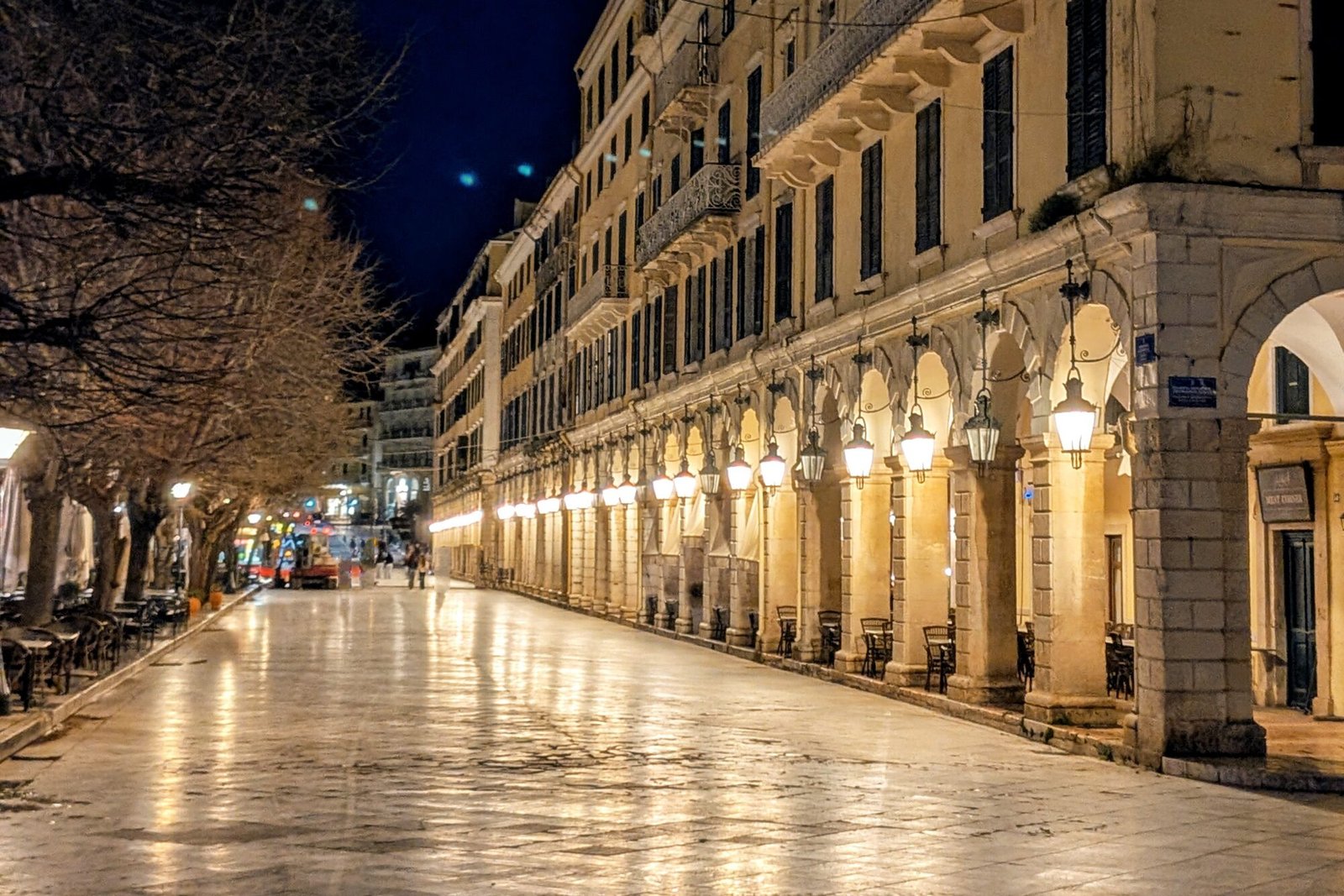
When you think of Greek islands, you might picture small whitewashed houses, blue domes, and ancient ruins. But Corfu – the lush, green island in the Ionian Sea – breaks the mold. Instead of stark minimalism and small villages, here you’ll find Venetian palaces, Italian-inspired pasta dishes, and cobbled streets that feel more like northern Italy than Athens.
For over 400 years, Corfu was ruled by Venice, and that legacy still defines the island to this day. From its architecture to its food, Corfu is unmistakably Greece with an equally unmistakable Italian twist.
Why Does Corfu Feel So Italian? A Brief History
Corfu’s Italian identity began in 1386, when the Venetians took control of the island, using it as a strategic stronghold against the Ottoman Empire. For four centuries, Venice left its mark on everything – language, governance, and culture. Even after the fall of the Republic of Venice in 1797, Corfu passed through French and British hands before joining Greece in 1864. Yet, the Italian influence never faded.
Walking through Corfu Town (a UNESCO World Heritage Site), you’ll see why it was called the “Door to Venice”.
Venetian Architecture: Corfu’s Grand Italian Legacy
1. The Liston Promenade: A Slice of Venice
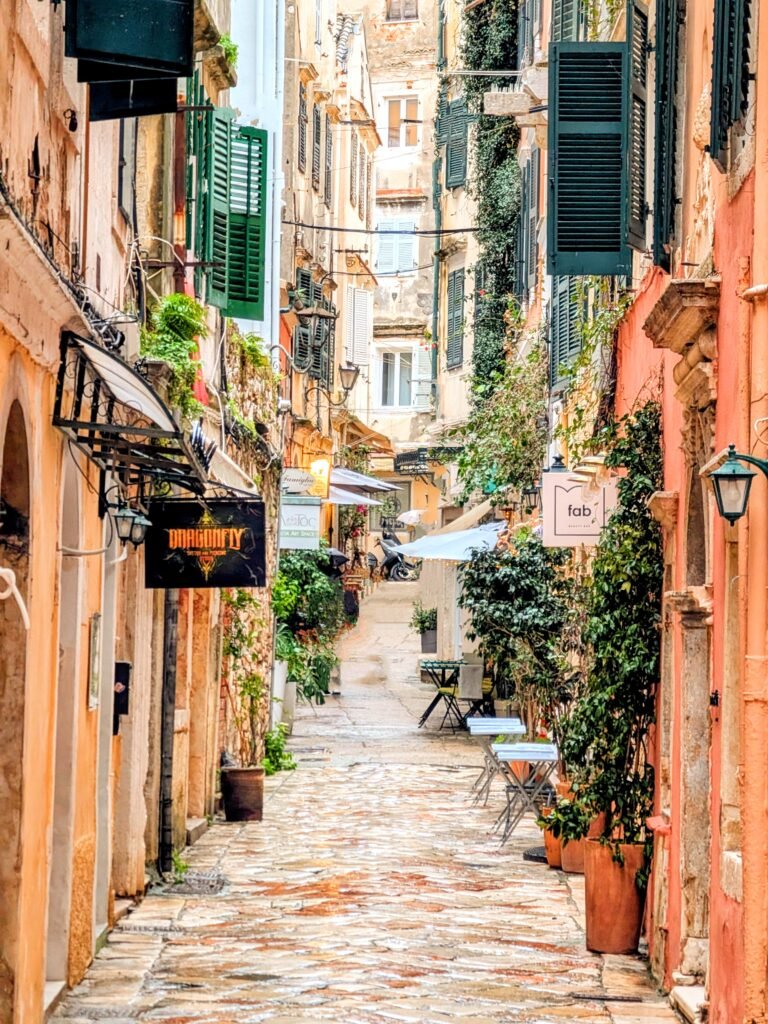
The most iconic Italianate feature in Corfu is the Liston, an elegant arcade lining Spianada Square. Built during the French occupation but inspired by Venice’s Procuratie in St. Mark’s Square, its arches and cafes exude a distinctly Venetian vibe. Sit at a café here with a Greek coffee, and you could mentally transport to Italy.
2. Old and New Fortresses
The Venetians were master fortress builders, and their two massive citadels – the Old Fortress (15th century) and the New Fortress (16th century) – protected Corfu from Ottoman sieges. Climb to the top for panoramic views of the island’s terracotta rooftops and the Adriatic Sea.
3. Bell Towers and Cobbled Streets
Unlike the flat, white villages of the Aegean, Corfu Town is a maze of narrow alleys (kantounia), hidden piazzas, and pastel-colored mansions. Look up, and you’ll spot Venetian-style campaniles.
Walk slowly to notice the blink-and-you’ll-miss-them narrow passageways. Step into any church of the Old Town, and you’ll transport yourself to the Italian Baroque and Rococo designs.
4. Aristocratic Palazzi
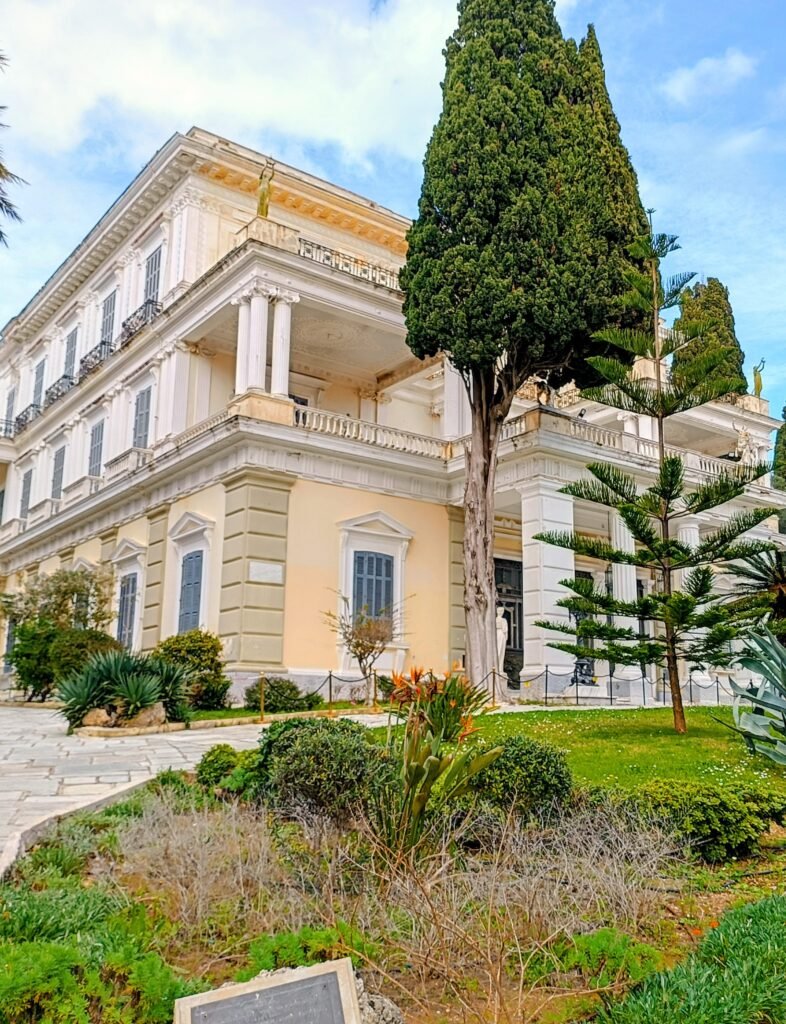
Corfu’s nobility once lived in grand Italian-style mansions, like the Palazzo Corfiote and the Maitland Rotunda, built for a British commissioner but designed in neoclassical Italian fashion. Even the Achilleion Palace, built for Empress Elisabeth of Austria (“Sisi”), mixes Greek mythology with Italian Renaissance grandeur.
Corfiot Cuisine: Where Greece Meets Italy
If you love Italian food, you’ll find delicious surprises in Corfu’s kitchens. The island’s signature dishes are a mouthwatering fusion of Greek and Venetian flavors.
1. Pastitsada: Corfu’s Answer to Venetian Bigoli – This rich, slow-cooked dish features thick pasta tubes (like Italian bigoli) in a spiced meat sauce, often made with rooster or beef. Seasoned with cinnamon, cloves, and tomato, it’s a distant cousin of Venice’s spezzatino.
2. Sofrito: A Garlicky Venetian Delight – Tender veal cooked in a white wine, garlic, and parsley sauce, sofrito seems to have its roots in the cooking of Venetian settlers using Corfiot ingredients.
4. Sweets & Spirits: From Cannoli to Kumquat – Mandolato: A crunchy almond nougat, similar to Italian torrone. Kumquat Liqueur: A citrusy digestif, often served like limoncello.
Find Corfu’s Italian heritage today
Beyond its architectural beauty and fusion cuisine, Corfu’s history and legacy is hugely important for Greece. It stands as a rare example of places not influenced by the Ottoman Empire due to its association with medieval and renaissance Italy, that still uniquely manages to blend in with the rest of Greek culture.
Corfu still has a large Catholic community, which is rare in Greece. The Church of San Giacomo and the Annunziata Cathedral stand as reminders of this heritage.
Its musical tradition is truly second to none in Greece, and here music flourished in pathways different to the mainland. Critically, the Greek National Anthem was composed and first performed on this island, whilst there are still dozens of philharmonic orchestras across the villages and neighborhoods of the island, preserving a distinct and proud local artistic culture.
Are you ready to experience Corfu’s Italian Side? Contact us today!